There has been growing interest in the model of semiconductor lasers with non-Markovian relaxation. Introducing senior and graduate students and research scientists to quantum mechanics concepts, which are becoming an essential tool in modern engineering, Engineering Quantum Mechanics develops a non-Markovian model for the optical gain of semiconductor, taking into account the rigorous electronic band-structure and the non-Markovian relaxation using the quantum statistical reduced-density operator formalism. Example programs based on Fortran 77 are provided for band-structures of zinc-blende and wurtzite quantum wells.
![[PDF] Engineering Quantum Mechanics Doyeol Ahn, Seoung-Hwan Park](https://digzon.com/wp-content/uploads/2024/04/c93cbbd9911d6631af5498340bd4e6fd-d.jpg)
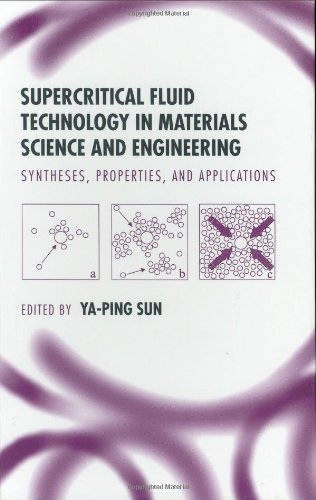
![[PDF] Supercritical fluid technology in materials science and engineering: synthesis, properties, and applications Ya-Ping Sun](https://digzon.com/wp-content/uploads/2024/04/b4250983bf56714d39e36571a59dc57d-d.jpg)
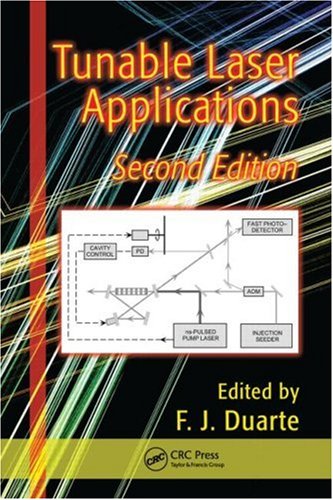
![[PDF] Tunable Laser Applications F. J. Duarte](https://digzon.com/wp-content/uploads/2024/04/b857583d53868d4da6835e1a61c683d1-d.jpg)
![[PDF] Tenth Annual Symposium on Frontiers of Engineering National Academy of Engineering](https://digzon.com/wp-content/uploads/2024/04/a35dc6f88dbf68289904c1a75fb52b61.jpg)
![[PDF] The Computer Engineering Handbook Vojin G. Oklobdzija et al.](https://digzon.com/wp-content/uploads/2024/04/46c261d6e4dc43d715e8f1e677bcd10e.jpg)
Reviews
There are no reviews yet.