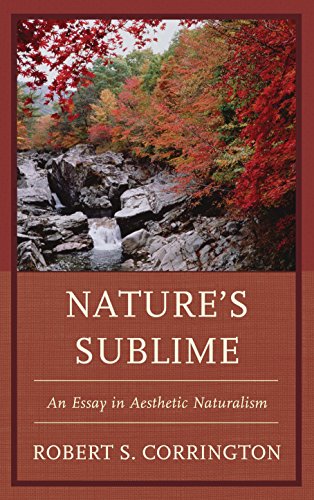
Nature?s Sublime uses a radical new form of phenomenology to probe into the deepest traits of the human process in its individual, social, religious, and aesthetic dimensions. Starting with the selving process the essay describes the role of signs and symbols in intra and interpersonal communication. At the heart of the human use of signs is a creative tension between religions symbols and the novel symbols created in the various arts. A contrast is made between natural communities, which flatten out and reject novel forms of semiosis, and communities of interpretation, which welcomes creative and enriched signs and symbols. The normative claim is made that religious sign/symbol systems have a tendency toward tribalism and violence, while the various spheres of the aesthetic are comparatively non-tribal, or even deliberatively anti-tribal. The concept/experience of beauty and the sublime is meant to replace that of religious revelation. The sublime is not merely an internal mode of attunement, contra Kant, but comes from the very depths of nature in the potencies of nature naturing.


Reviews
There are no reviews yet.