Modern life is made up of a mind-boggling array of materials. A simple drinking cup, for example, might be made of Styrofoam, paper, or glass, depending on the drinker’s needs at the moment. Home storage cabinets can be made of metal, wood, or plastic. Space shuttles are assembled from silicon, steel, and hundreds of other materials. All of these items owe their properties to the chemical bonds between the atoms that make up the substance. ”Chemical Bonds” examines the nature of the chemical bonds, answering fundamental questions about how they form, how they are broken, and how they help define life as we know it.
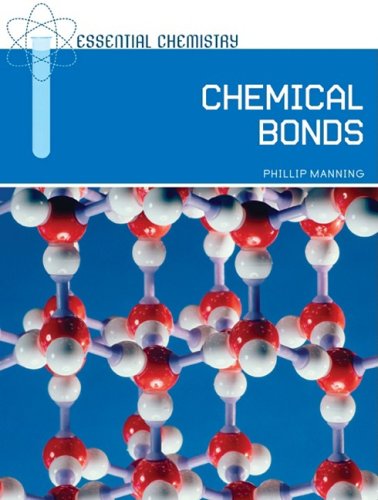
![[PDF] Chemical Bonds Phillip Manning](https://digzon.com/wp-content/uploads/2024/04/d498e43e5274482dc0e18da42a55bf49-d.jpg)
![[PDF] Nucleoside Triphosphates and their Analogs. Chemistry, Biotechnology, and Biological Applications Morteza Vaghefi](https://digzon.com/wp-content/uploads/2024/04/400F3C2C0B373F35499B06C5062D72A7-g.jpg)
![[PDF] Electron Tunneling in Chemistry R. G. Compton](https://digzon.com/wp-content/uploads/2024/04/5342eb532008580f3648bae0be2e8915-d.jpg)
![[PDF] Theory of planetary atmospheres : an introduction to their physics
and chemistry / Joseph W. Chamberlain](https://digzon.com/wp-content/uploads/2024/04/02d53f740a0c345e2b422f3cc6db8225-d.jpg)
![[PDF] Basic Organic Chemistry](https://digzon.com/wp-content/uploads/2024/04/780b0b848290bc45018501f362f8783d-g.jpg)
Reviews
There are no reviews yet.