Measurement and Evaluation by the Physical Educator: Why and How provides a clear, uncomplicated approach to the topic. Through Miller’s straightforward explanations, the student will be able to develop the skills to use and interpret fundamental statistics; to select and administer appropriate tests for measurement of physical performances; to interpret the measurement results; and to prescribe programs to meet the needs of the tested individuals. In addition, the student will learn classroom skills and will be able to construct effective objectives and knowledge tests, and evaluate the results. Study aids for reinforcement of chapter objectives are provided throughout the text.
![[PDF] Measurement by the Physical Educator: Why and How David Miller](https://digzon.com/wp-content/uploads/2024/04/1d29512a341f6c526bfa8f2652fd9d59-g.jpg)
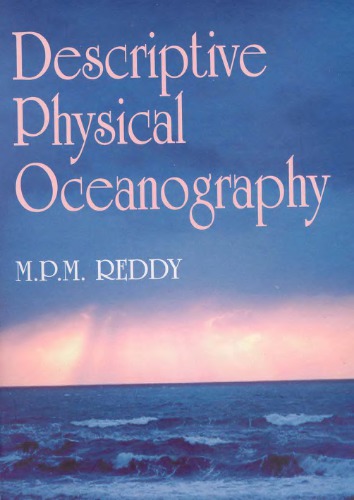
![[PDF] Descriptive Physical Geography M.P.M. Reddy](https://digzon.com/wp-content/uploads/2024/04/24CFF00CD5B927E2615A1A7E3E6C64B6-g.jpg)
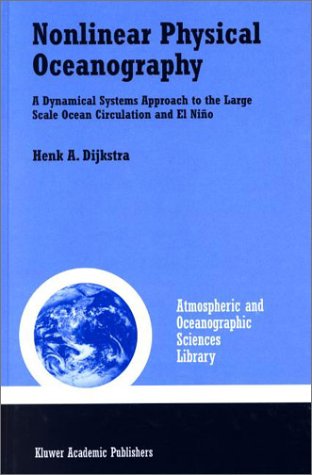
![[PDF] Nonlinear Physical Oceanography: A Dynamical Systems Approach to the Large Scale Ocean Circulation and El Ni?o Henk A. Dijkstra (auth.)](https://digzon.com/wp-content/uploads/2024/04/1a462233e561e42865288fd15fd09804-d.jpg)
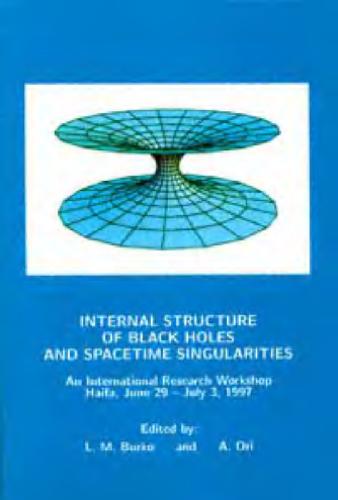
![[PDF] Internal structure of black holes and spacetime singularities: an international research workshop, Haifa, June 29-July 3, 1997 Lior M. Burko, Amos Ori](https://digzon.com/wp-content/uploads/2024/04/46a9df64ddfafed1242af5b54d4e1198.jpg)
![[PDF] Course of Theoretical Physics: Physical Kinetics E. M. Lifshitz, L. P. Pitaevskii, J. B. Sykes, R. N. Franklin](https://digzon.com/wp-content/uploads/2024/04/19c799593ea60733384611619c30f847.jpg)
Reviews
There are no reviews yet.