An in-depth study of non-crystalline solids in which the arrangement of the atoms do not have long-range order. Describes the way amorphous solids are formed, the phenomenology of the liquid-to-glass and glass- to-liquid transition, and the technological applications. Emphasizes modern approaches such as scaling, localization, and percolation. Includes extensive treatment of structural aspects of amorphous solids, ranging from metallic glasses, to chalcogenides, to organic polymers. Incorporates illustrations for the clarification of physics concepts.
![[PDF] The physics of amorphous solids Richard Zallen](https://digzon.com/wp-content/uploads/2024/04/3d731daf58f4bd9ae3eb1ac070d0a8d2.jpg)
![[PDF] Analysis, manifolds and physics.Part II Y. Choquet-Bruhat, C. DeWitt-Morette](https://digzon.com/wp-content/uploads/2024/04/4b4fc9d08a5bc7b660f9259696dd5031-d.jpg)
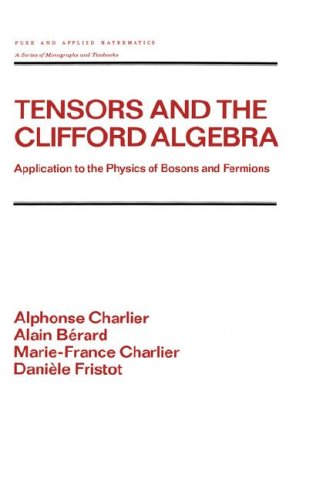
![[PDF] Tensors and the Clifford algebra: application to the physics of bosons and fermions Alphonse Charlier, Alain Berard, Marie-France Charlier, Daniele Fristot](https://digzon.com/wp-content/uploads/2024/04/c88292e8a0002aa49fc6e417fbe29c7e-d.jpg)
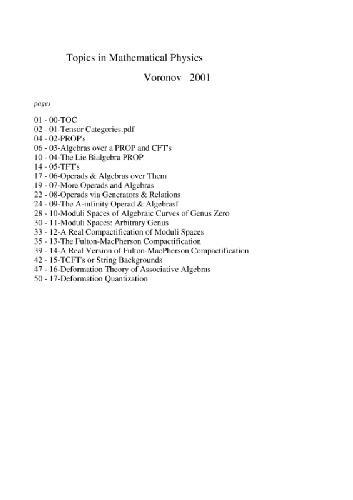
![[PDF] Topics in mathematical physics Voronov A.A.](https://digzon.com/wp-content/uploads/2024/04/7a3d9663da110f1d7cda9730e4a6cfef.jpg)
![[PDF] Analysis, manifolds, and physics. 92 applications /Part II Yvonne Choquet-Bruhat, Cecile DeWitt-Morette](https://digzon.com/wp-content/uploads/2024/04/b03f42af58eea3c98f72a47321e1a9c0.jpg)
Reviews
There are no reviews yet.