This survey of the current state of the art in computational models for turbulent reacting flows carefully analyzes the strengths and weaknesses of the various techniques described. Rodney Fox focuses on the formulation of practical models as opposed to numerical issues arising from their solution. He develops a theoretical framework based on the one-point, one-time joint probability density function (PDF). The study reveals that all commonly employed models for turbulent reacting flows can be formulated in terms of the joint PDF of the chemical species and enthalpy.

![[PDF] Computational Models for Turbulent Reacting Flows Rodney O. Fox](https://digzon.com/wp-content/uploads/2024/04/cc3f88e2bcec11ec976e52f75abeb7a8-d.jpg)
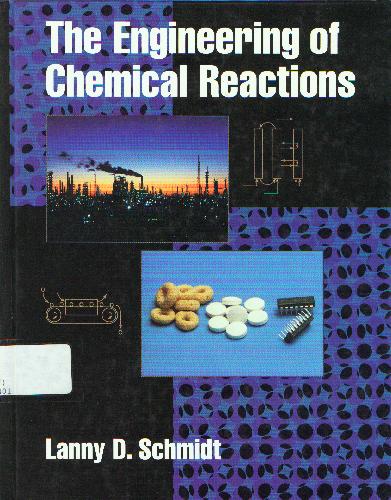
![[PDF] The Engineering of Chemical Reactions Lanny D. Schmidt](https://digzon.com/wp-content/uploads/2024/04/7d818d44da705f22060bd5341796e6e1.jpg)
![[PDF] Topical Antimicrobials Industrial Applications in Consumer Products and Pharmaceuticals Daryl S. Paulson](https://digzon.com/wp-content/uploads/2024/04/ecbb1a5a6a845e4e7d2a4468a9cd9c2d-d.jpg)
![[PDF] The Computer Engineering Handbook Vojin G. Oklobdzija et al.](https://digzon.com/wp-content/uploads/2024/04/46c261d6e4dc43d715e8f1e677bcd10e.jpg)
![[PDF] Thermo-Dynamics of Plates and Shells Jan Awrejcewicz, Vadim Anatolevich Krys'ko, Anton V. Krys'ko](https://digzon.com/wp-content/uploads/2024/04/d10cd753cc1f6d10fdb9cabf209a47eb-d.jpg)
Reviews
There are no reviews yet.