
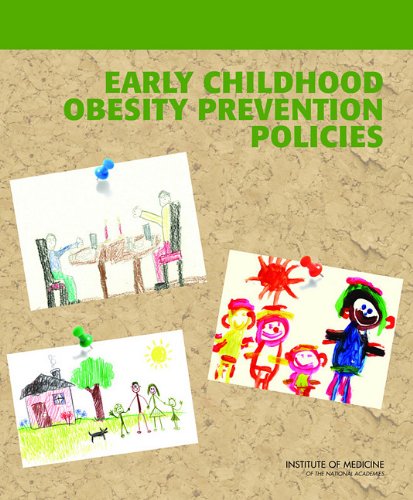
Childhood obesity is a serious health problem that has adverse and long-lasting consequences for individuals, families, and communities. The magnitude of the problem has increased dramatically during the last three decades and, despite some indications of a plateau in this growth, the numbers remain stubbornly high. Efforts to prevent childhood obesity to date have focused largely on school-aged children, with relatively little attention to children under age 5. However, there is a growing awareness that efforts to prevent childhood obesity must begin before children ever enter the school system. Early Childhood Obesity Prevention Policies reviews factors related to overweight and obese children from birth to age 5, with a focus on nutrition, physical activity, and sedentary behavior, and recommends policies that can alter children’s environments to promote the maintenance of healthy weight. Because the first years of life are important to health and well-being throughout the life span, preventing obesity in infants and young children can contribute to reversing the epidemic of obesity in children and adults. The book recommends that health care providers make parents aware of their child’s excess weight early. It also suggests that parents and child care providers keep children active throughout the day, provide them with healthy diets, limit screen time, and ensure children get adequate sleep. In addition to providing comprehensive solutions to tackle the problem of obesity in infants and young children, Early Childhood Obesity Prevention Policies identifies potential actions that could be taken to implement those recommendations. The recommendations can inform the decisions of state and local child care regulators, child care providers, health care providers, directors of federal and local child care and nutrition programs, and government officials at all levels.
Medicine
{PDF} Early Childhood Obesity Prevention Policies Committee on Obesity Prevention Policies for Young Children, Institute of Medicine
$9.99
![[PDF] Preserving Public Trust: Accreditation and Human Research Participant Protection Programs Committee on Assessing the System for Protecting Human Research Subjects, Board on Health Sciences Policy, Institute of Medicine, Institute of Medicine](https://digzon.com/wp-content/uploads/2024/04/1b86bf2082929593b6cfddb07fb2c1a8-d.jpg)
![[PDF] On Being a Scientist: Responsible Conduct in Research, Second Edition National Academy of Sciences, National Academy of Engineering, Institute of Medicine](https://digzon.com/wp-content/uploads/2024/04/8a3bc970ab750124f6706d0bea8cc1ff-d.jpg)
![[PDF] 2008 Amendments to the National Academies' Guidelines for Human Embryonic Stem Cell Research Human Embryonic Stem Cell Research Advisory Committee, National Research Council, Institute of Medicine, National Academies](https://digzon.com/wp-content/uploads/2024/04/266bcf8509c7558de3673f1cd4917916-d.jpg)
Reviews
There are no reviews yet.