This self-contained book presents basic methods of numerical simulation of gravitational systems, with applications in astronomy and cosmology. The first half of the book presents and explains the fundamental mathematical tools needed to describe the dynamics of a large number of mutually attractive particles. Particular attention is given to the techniques needed to model known planetary and astrophysical phenomena such as Hubble motion. The second half of the book demonstrates how to develop clear and elegant algorithms for models of gravitational systems.
![[PDF] Gravitational N-body simulations: tools and algorithms Sverre J. Aarseth](https://digzon.com/wp-content/uploads/2024/04/efd1cc4cefaae40c7579cfcd9dc32653-d.jpg)
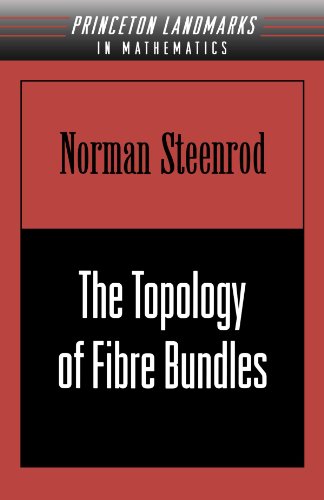
![[PDF] The topology of fibre bundles Norman Steenrod](https://digzon.com/wp-content/uploads/2024/04/2ef66b6104ea65926f7ad1541698a36c-d.jpg)
![[PDF] Analysis, manifolds and physics Choquet-Bruhat Y., DeWitt-Morette C., Dillard-Bleick M.](https://digzon.com/wp-content/uploads/2024/04/82ee71a5e9ffe9518de5e1fbe70122e6.jpg)
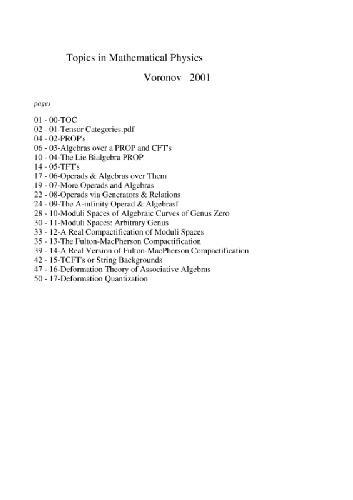
![[PDF] Topics in mathematical physics Voronov A.A.](https://digzon.com/wp-content/uploads/2024/04/7a3d9663da110f1d7cda9730e4a6cfef.jpg)
![[PDF] Vector analysis, a textbook for students of mathematics and physics Gibbs J.W.](https://digzon.com/wp-content/uploads/2024/04/a99a3bf21d73f96d4245f1c10af3a26c.jpg)
Reviews
There are no reviews yet.