First, systems biology is an inter-disciplinary approach, requiring the combined talents of biologists, mathematicians, and computer scientists. Second, systems biology is holistic, with the goal of obtaining a comprehensive understanding of the workings of biological systems. This is achieved through the acquisition of massive amounts of data by high-throughput technologies?oligonucleotide microarrays, mass spectrometry, and next-generation sequencing?and the analysis of this data through sophisticated mathematical algorithms. It is perhaps the use of mathematics, to integrate abundant and diverse types of data and to generate models of interconnected molecular networks, that best characterizes systems biology.
![[PDF] Systems Biology Michael G. Katze](https://digzon.com/wp-content/uploads/2024/04/7d1d21ad913e906c8b4ff19692c15161-d.jpg)
![[PDF] E. coli Plasmid Vectors. Methods and Applications Nicola Casali, Andrew Preston](https://digzon.com/wp-content/uploads/2024/04/41a8f9558ef92f84c00e573254514bd3-d.jpg)
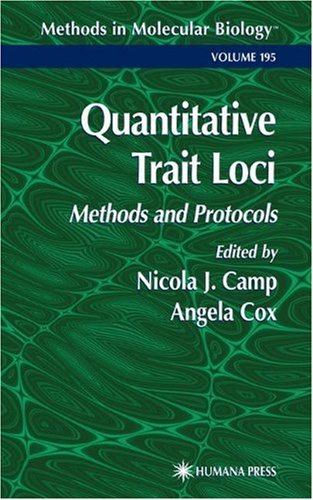
![[PDF] Quantitative Trait Loci. Methods and Protocols Nicola J. Camp, Angela Cox](https://digzon.com/wp-content/uploads/2024/04/fd6f2a784fd1d4670c62be67cc4c9a10-d.jpg)
![[PDF] In Situ Hybridization Protocols Ian A. Darby](https://digzon.com/wp-content/uploads/2024/04/bfc7cf27d7d4fb87d52146c3492de803-d.jpg)
![[PDF] Species Diagnostics Protocols: PCR and Other Nucleic Acid Methods Justin P. Clapp](https://digzon.com/wp-content/uploads/2024/04/4e617342281e8d36ac1f1e29f777541a-d.jpg)
Reviews
There are no reviews yet.